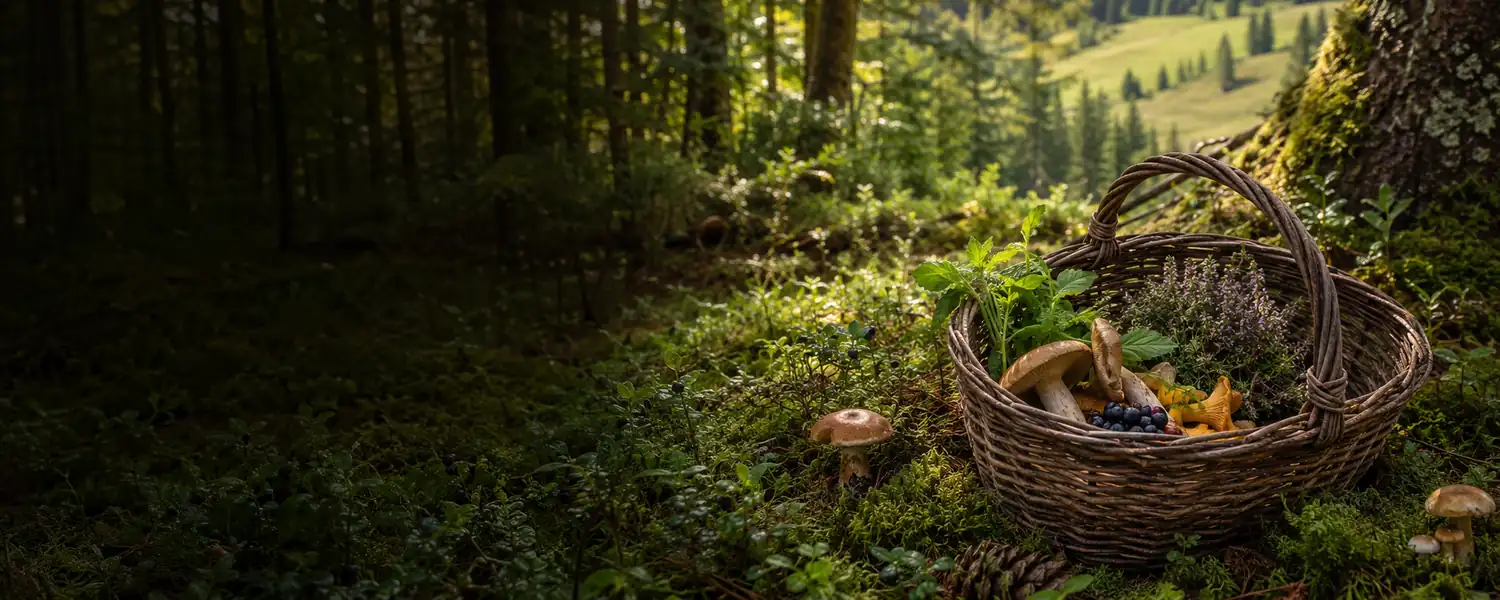
Gathering in Austria's forests
Forest gold – mushrooms, berries & wild herbs
What the forest gives when you know where to look – with identifying features, season, look-alike warnings and kitchen tips.
Austria's forests and Alm meadows are nature's pantry. If you identify the species reliably, know their season and follow a few rules, you will bring home something precious every time – from golden Eierschwammerl (chanterelles) and wild bilberries to aromatic Bärlauch (wild garlic). Here you will find the most important edible species, organised into mushrooms, berries and wild herbs.
Before you start: the gathering rules
Group 1 · Mycology
Mushrooms – the gold of the forest floor
Edible mushrooms grow in symbiosis with their trees – read the tree and you will find the mushroom. Seven reliable species, each with its most certain feature and the look-alike you need to know.
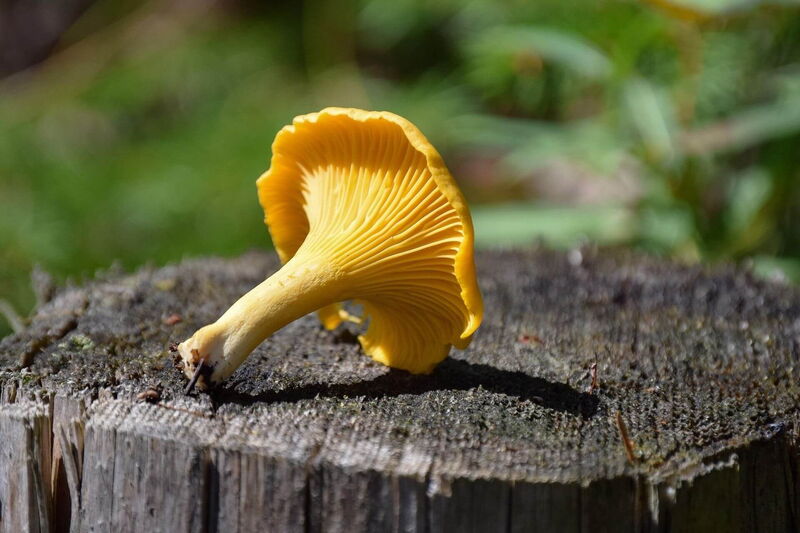 June – October
Chanterelle
Cantharellus cibarius · „Eierschwammerl"
- Feature:
- egg-yolk yellow, forked ridges instead of true gills, fruity apricot scent.
- Habitat:
- mossy coniferous & mixed forests, often in rows.
- ⚠ Look-alike:
- False chanterelle – true, soft gills.
- Kitchen:
- cream sauce, scrambled eggs; not raw.
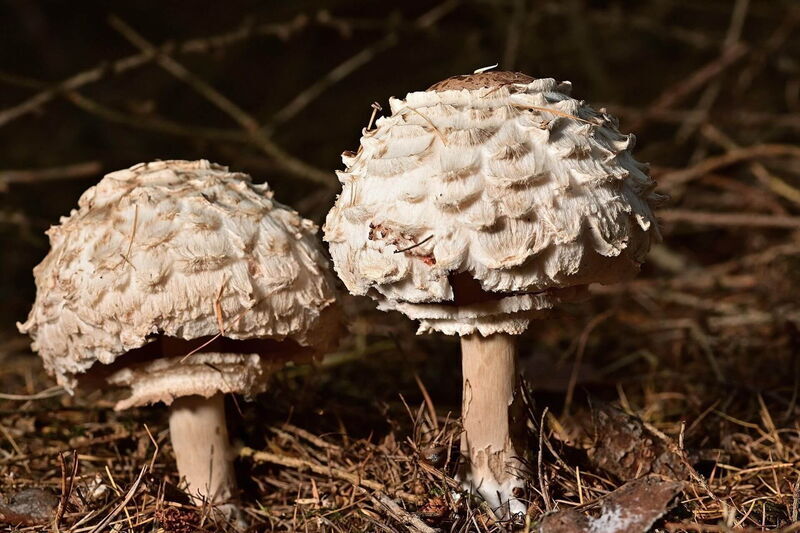 July – October
Parasol mushroom
Macrolepiota procera · Riesenschirmling
- Feature:
- cap up to 30 cm, scaly; movable double ring, snakeskin-patterned stem.
- Habitat:
- meadows, clearings, forest edges.
- ⚠ Look-alike:
- young death caps – check ring & size.
- Kitchen:
- breaded and fried like a Schnitzel.
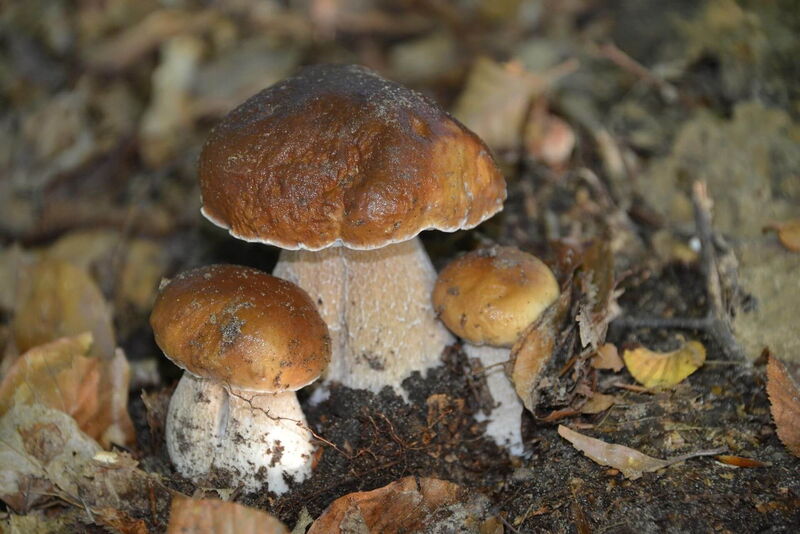 June – October
Porcini
Boletus edulis · Herrenpilz
- Feature:
- brown cap, white netting on the stem, firm tubes (white → yellowish).
- Habitat:
- near spruces & beeches, symbiotic partners.
- ⚠ Look-alike:
- Bitter bolete – bitter, pink tubes.
- Kitchen:
- pan-fried; especially intense when dried.
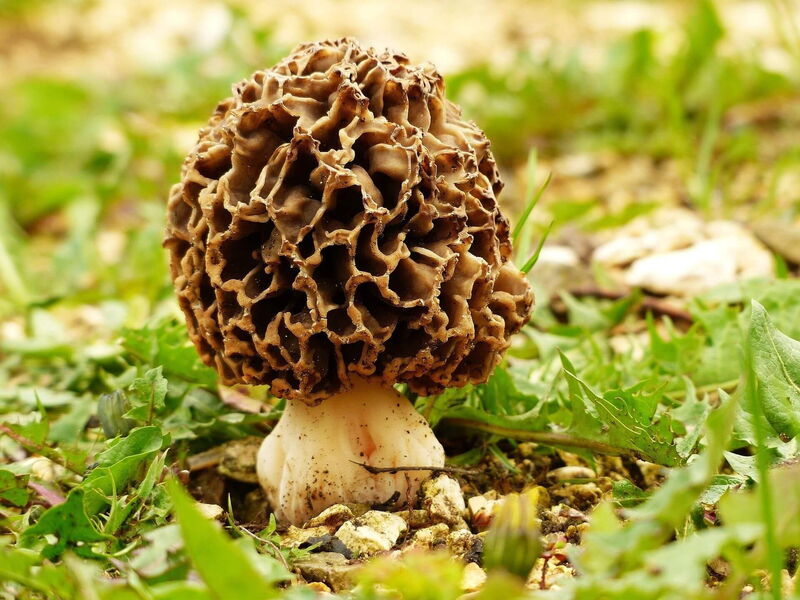 April – May
Morel
Morchella esculenta · Speisemorchel
- Feature:
- honeycomb-pitted cap, completely hollow inside.
- Habitat:
- riparian forests & ash trees on limestone – the spring mushroom.
- ⚠ Look-alike:
- false morel (poisonous!) – brain-like convolutions.
- Kitchen:
- only thoroughly cooked, never raw.
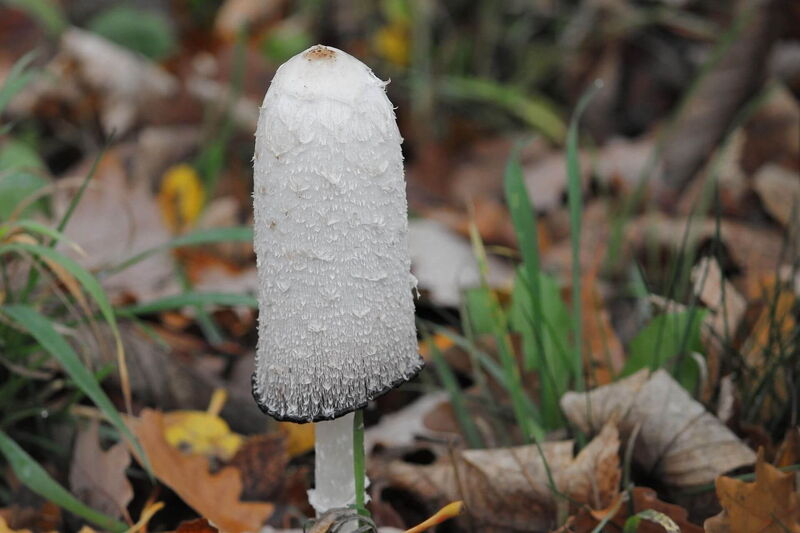 May – November
Shaggy ink cap
Coprinus comatus · Spargelpilz
- Feature:
- white, shaggy-scaly cap; dissolves inky-black with age.
- Habitat:
- meadows, path & field edges.
- Kitchen:
- only young & process immediately; no alcohol with it.
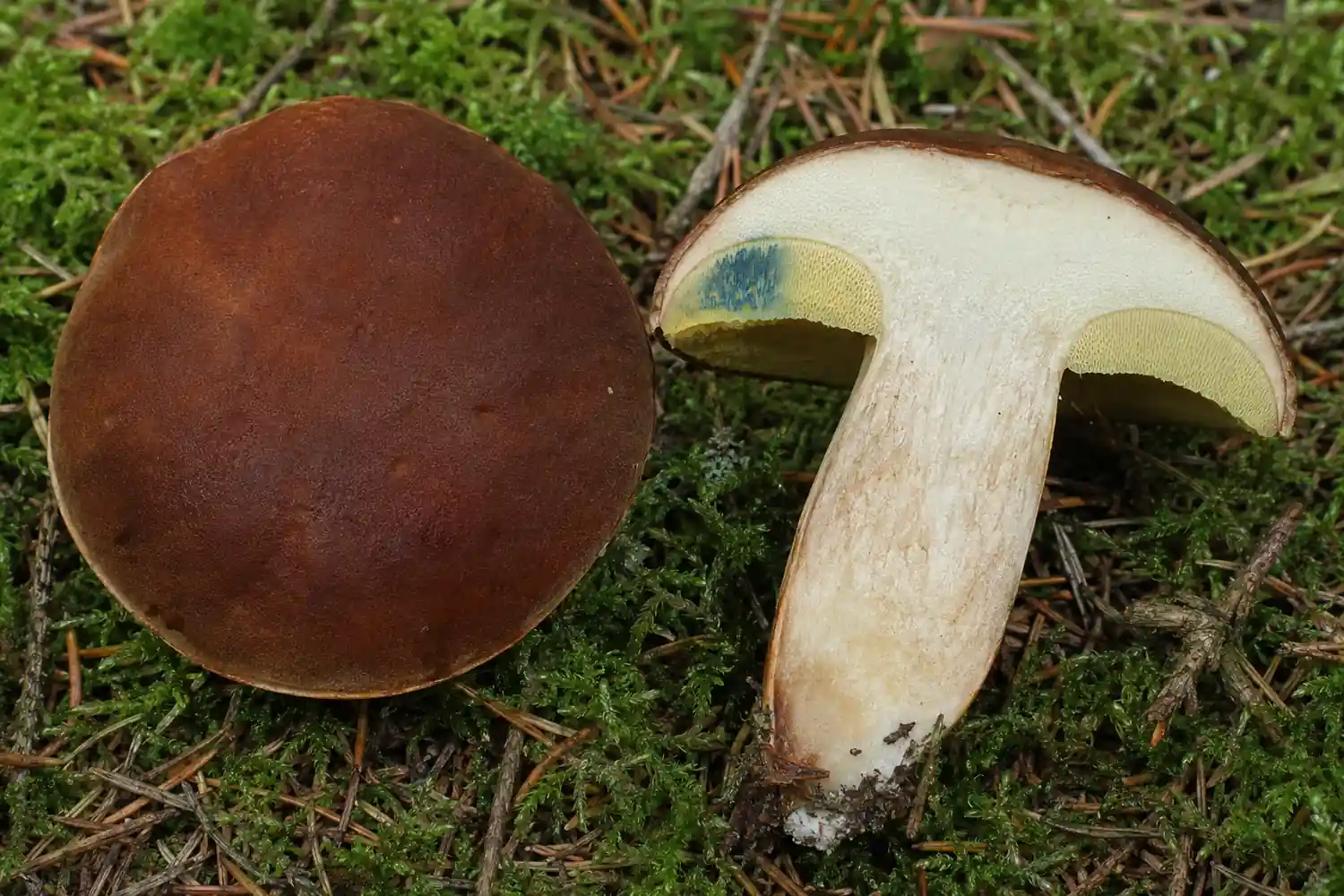 July – November
Bay bolete
Imleria badia
- Feature:
- chestnut-brown cap, slimy when wet; tubes bruise blue under pressure.
- Habitat:
- coniferous forests – very common, ideal for beginners.
- ⚠ Look-alike:
- Bitter bolete – bitter, pink tubes.
- Kitchen:
- versatile; pan-fry or dry.
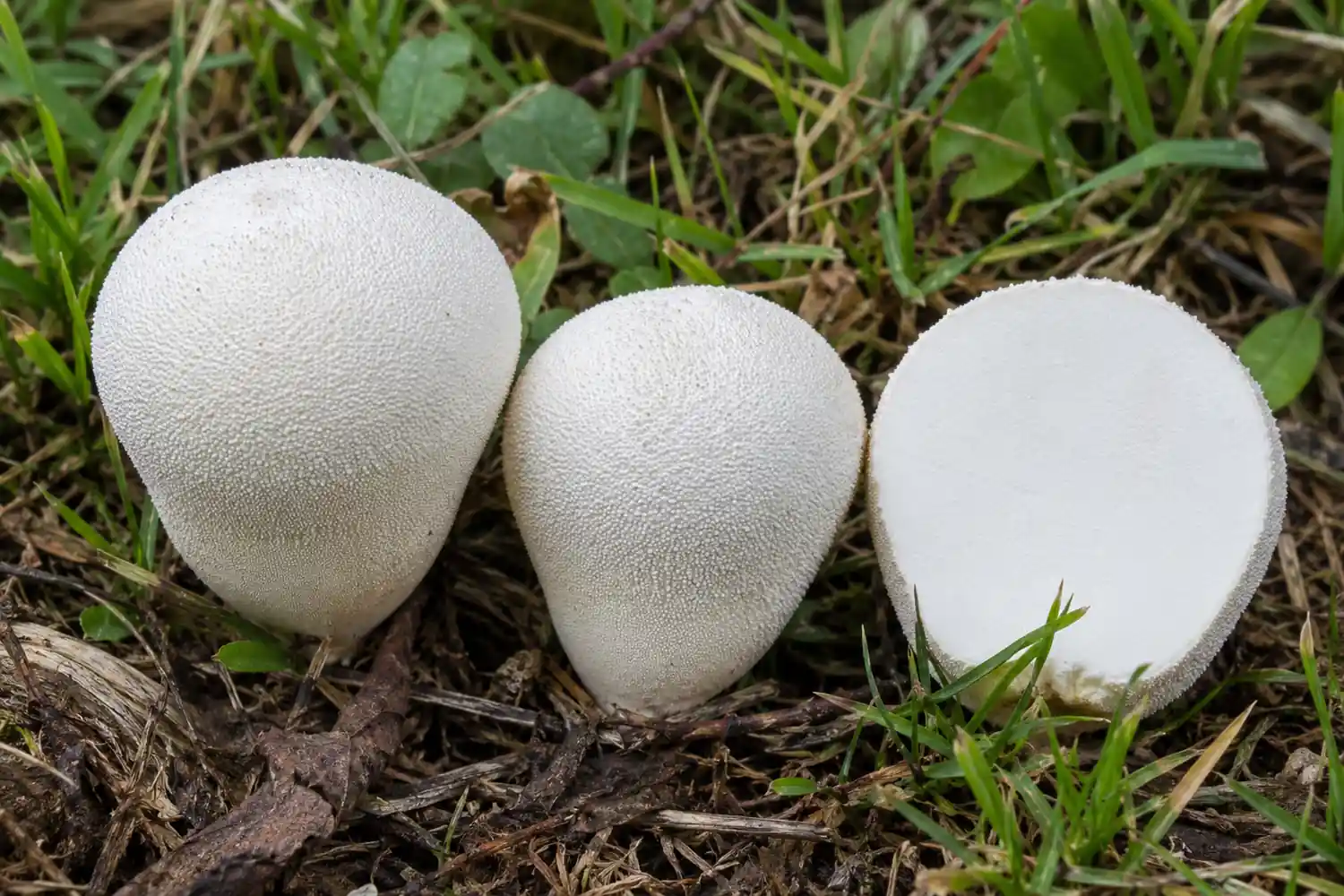 August – October
Puffball
Calvatia gigantea · Riesenbovist
- Feature:
- large white ball (up to football size), pure white & firm inside when young.
- Habitat:
- meadows, pastures, forest edges.
- ⚠ Look-alike:
- only young with pure white flesh; cut open to be sure (homogeneous inside).
- Kitchen:
- sliced, breaded and fried.
Group 2 · Alm meadows & forest edges
Berries & fruit – sweet treasures of the heights
Wild berries are smaller than their cultivated relatives but far more aromatic – and the higher the Alm, the more intense.
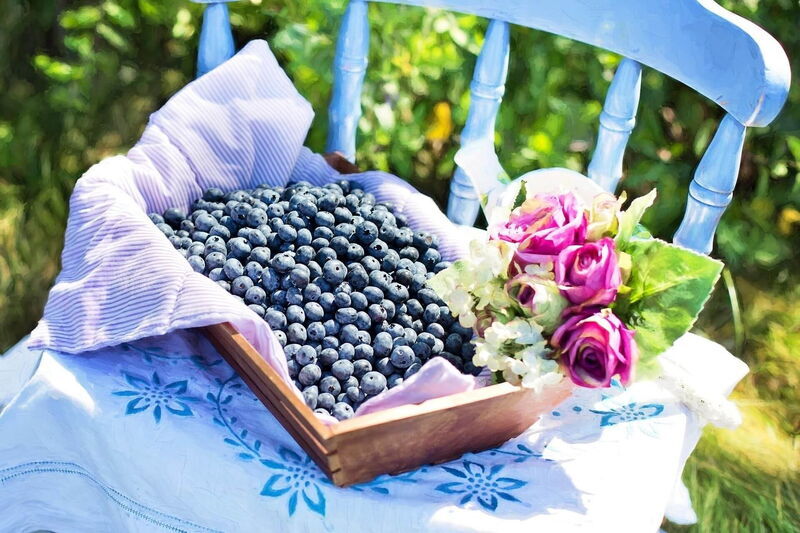 July – September
Bilberries
Vaccinium myrtillus · „Moosbeeren"
- Feature:
- low dwarf shrubs, blue-black; stains fingers & tongue.
- Habitat:
- altitudes above 1,500 m, acidic soils.
- Kitchen:
- Moosbeernocken, jam, Kaiserschmarrn.
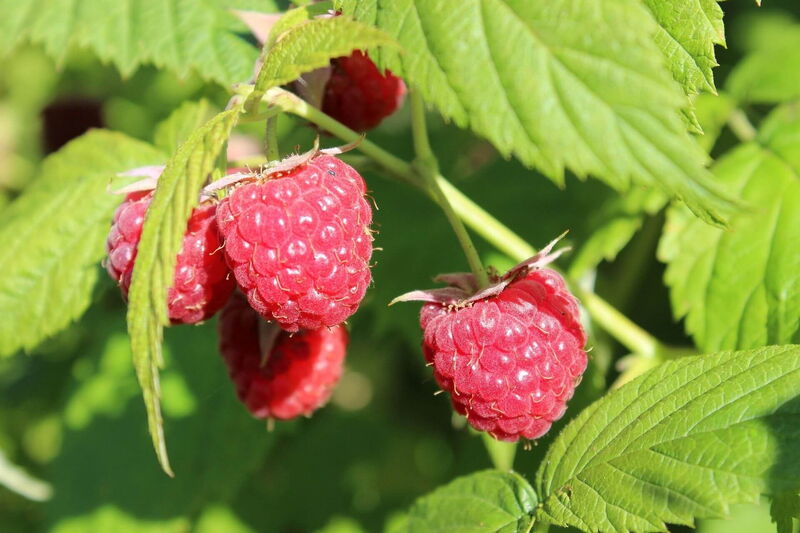 July – August
Alm raspberries
Rubus idaeus · Wildhimbeere
- Feature:
- small, soft, highly aromatic – detaches from the core.
- Habitat:
- sunny mountain forest edges, cleared areas.
- Kitchen:
- raw, as Röster (compote) or syrup.
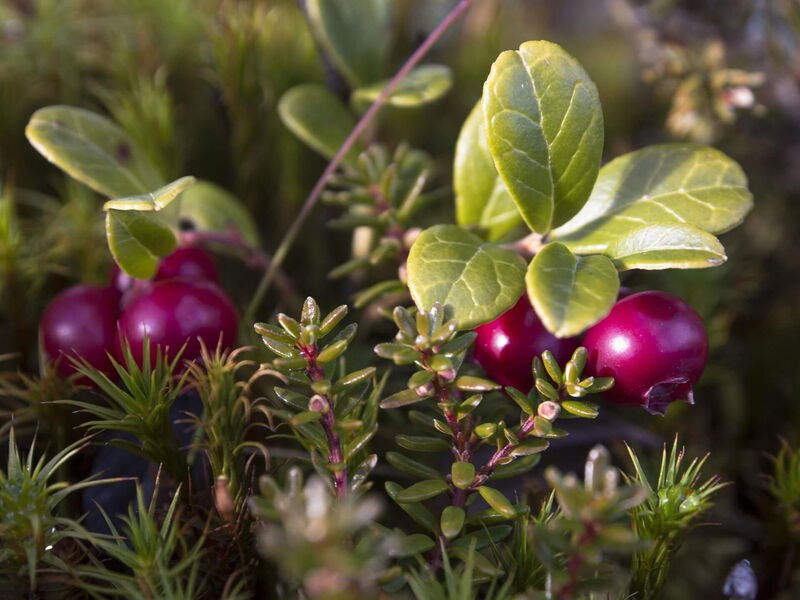 August – September
Lingonberries
Vaccinium vitis-idaea
- Feature:
- small, bright red, tart; leathery evergreen leaf.
- Habitat:
- open mountain forests, often next to bilberries.
- Kitchen:
- classic with game, Kaiserschmarrn & cheese.
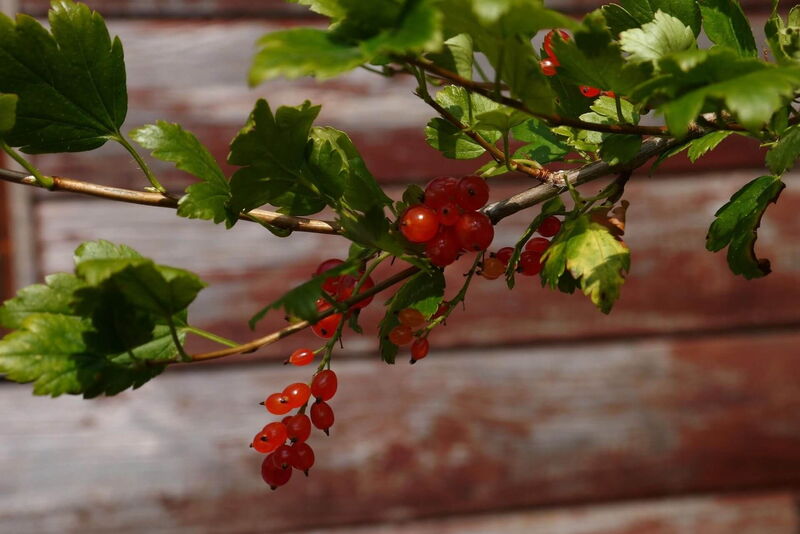 July – August
Alpine currants
Ribes · „Ribisel"
- Feature:
- clusters of red to black berries, delicately tart.
- Habitat:
- shrubbery, forest edges, near streams.
- Kitchen:
- jelly, juice, cake topping.
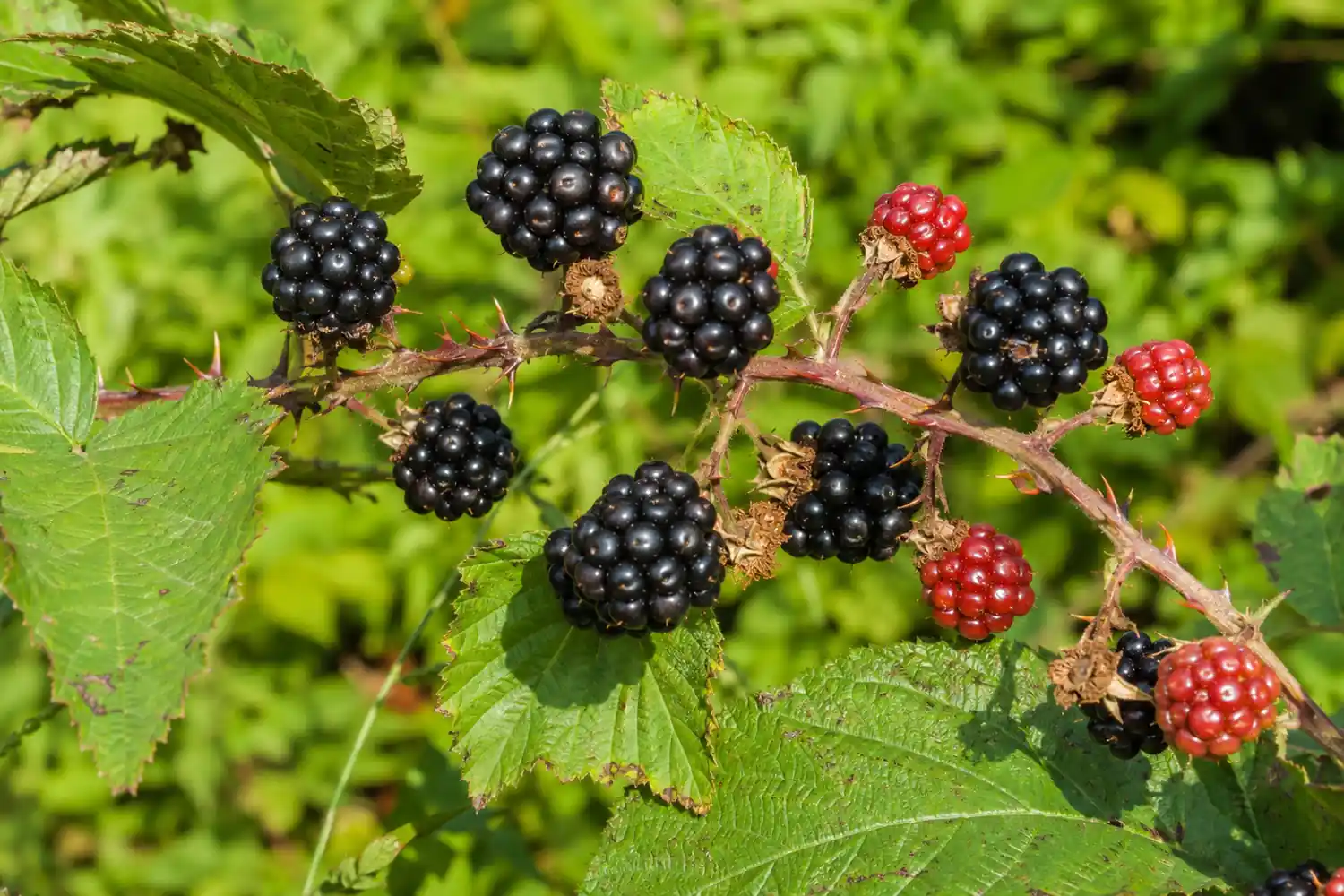 August – September
Blackberries
Rubus fruticosus
- Feature:
- thorny canes, glossy black aggregate fruits.
- Habitat:
- sunny forest edges, embankments.
- Kitchen:
- raw, jam, in a crumble.
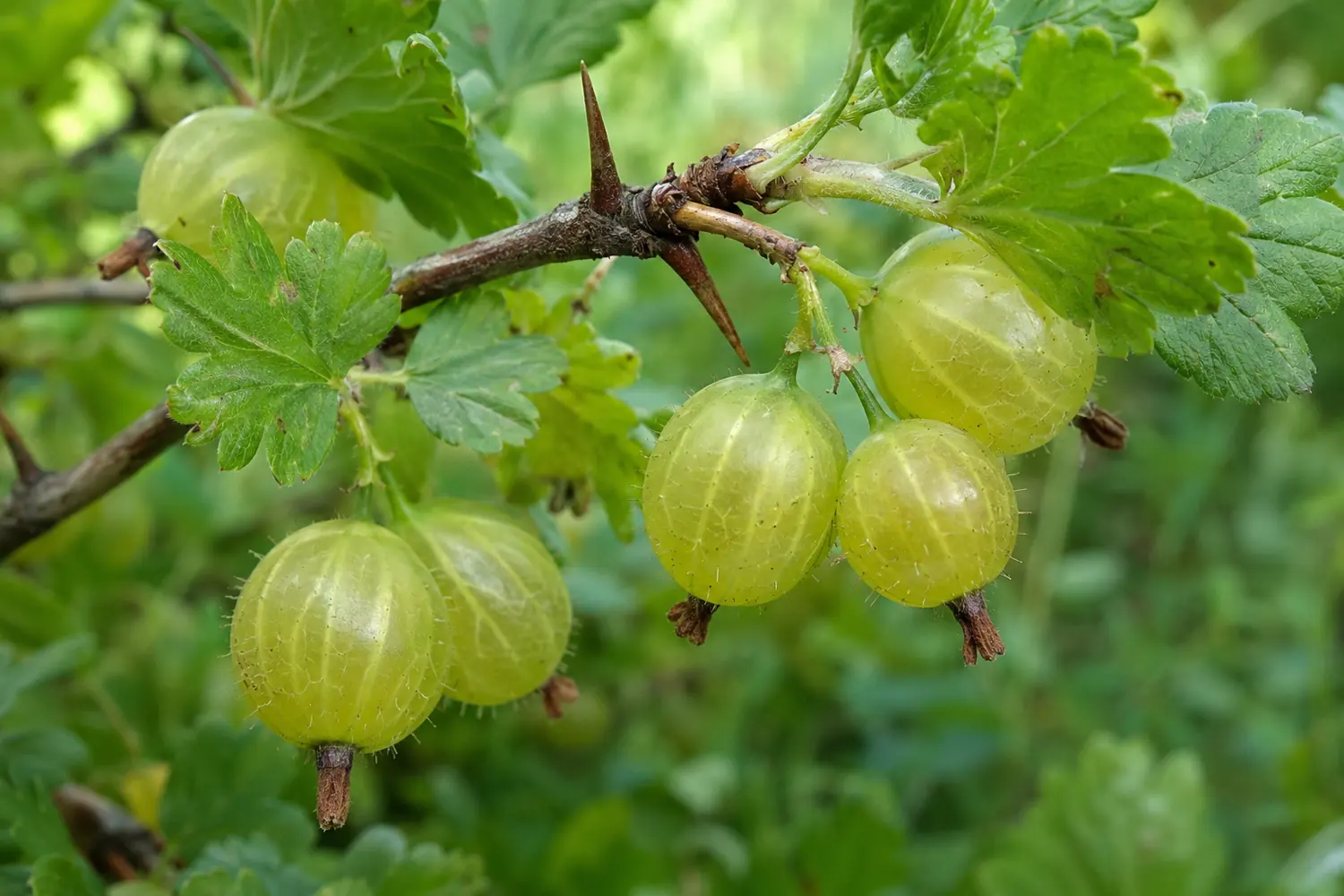 June – July
Gooseberries
Ribes uva-crispa
- Feature:
- green-yellow, hairy, pleasantly tart; thorned branches.
- Habitat:
- hedges, forest edges, overgrown gardens.
- Kitchen:
- raw when ripe, compote, cake.
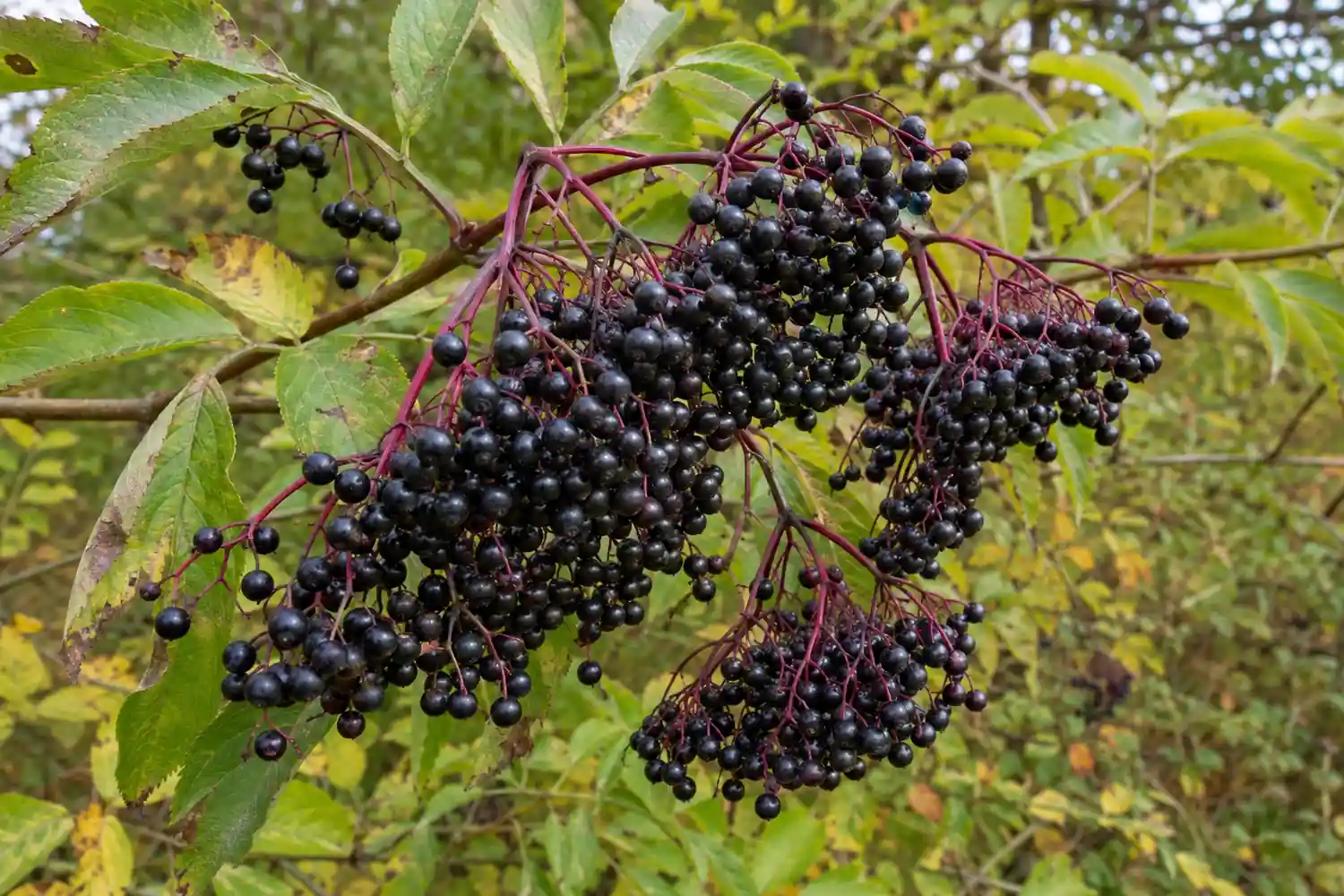 Flowers May–June · berries Aug–Sept
Black elder
Sambucus nigra · „Holler"
- Feature:
- large white flower umbels, later black berry umbels.
- Habitat:
- forest edges, waysides, hedges.
- ⚠ Look-alike:
- dwarf elder (poisonous) – herbaceous, upright berries.
- Kitchen:
- flowers for syrup & Hollerküchle; berries only cooked.
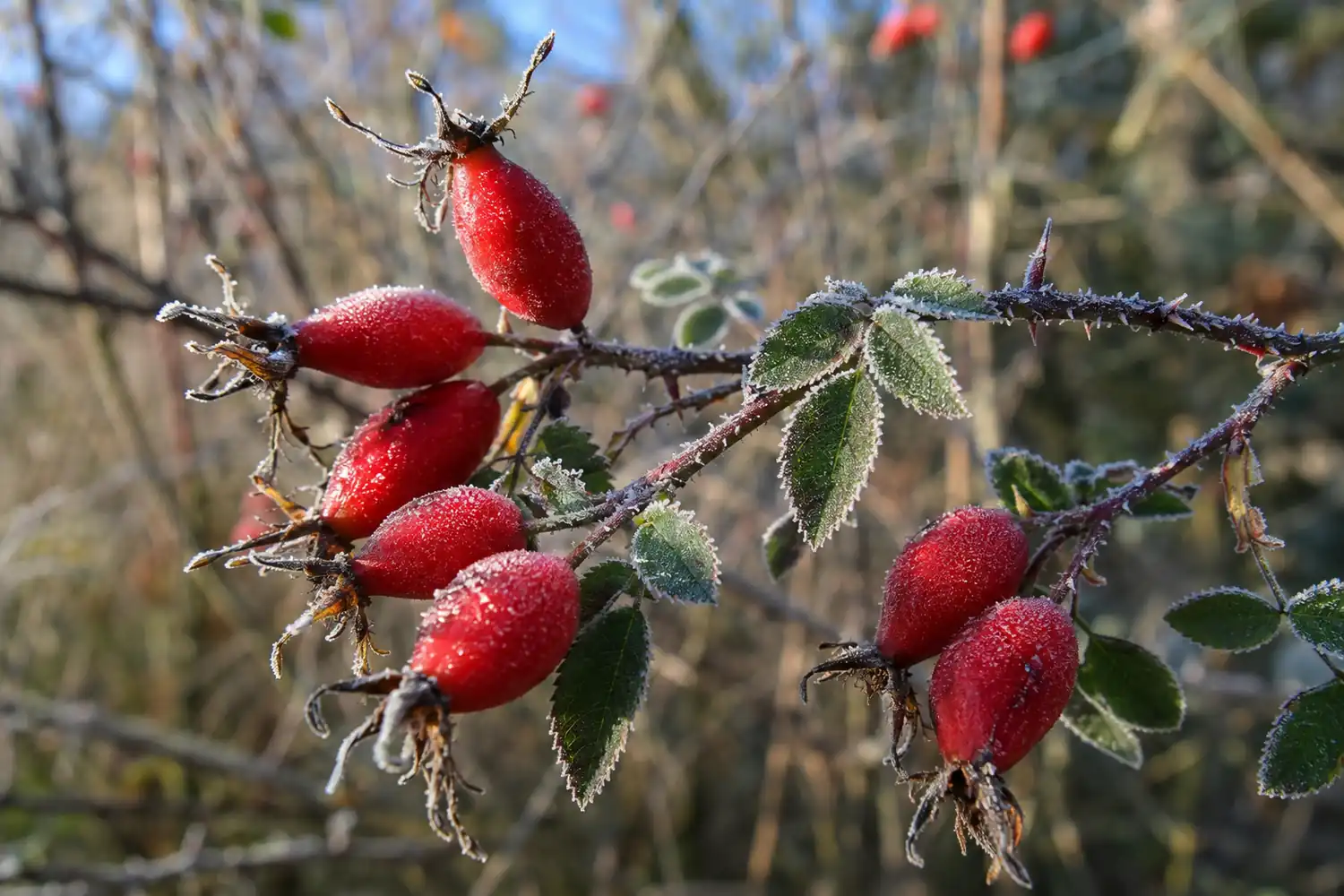 September – November
Rose hips
Rosa canina · Wildrose
- Feature:
- bright red aggregate fruits; soft after the first frost.
- Habitat:
- sunny hedges & forest edges.
- Kitchen:
- purée, tea, jam – remove seeds & fine hairs.
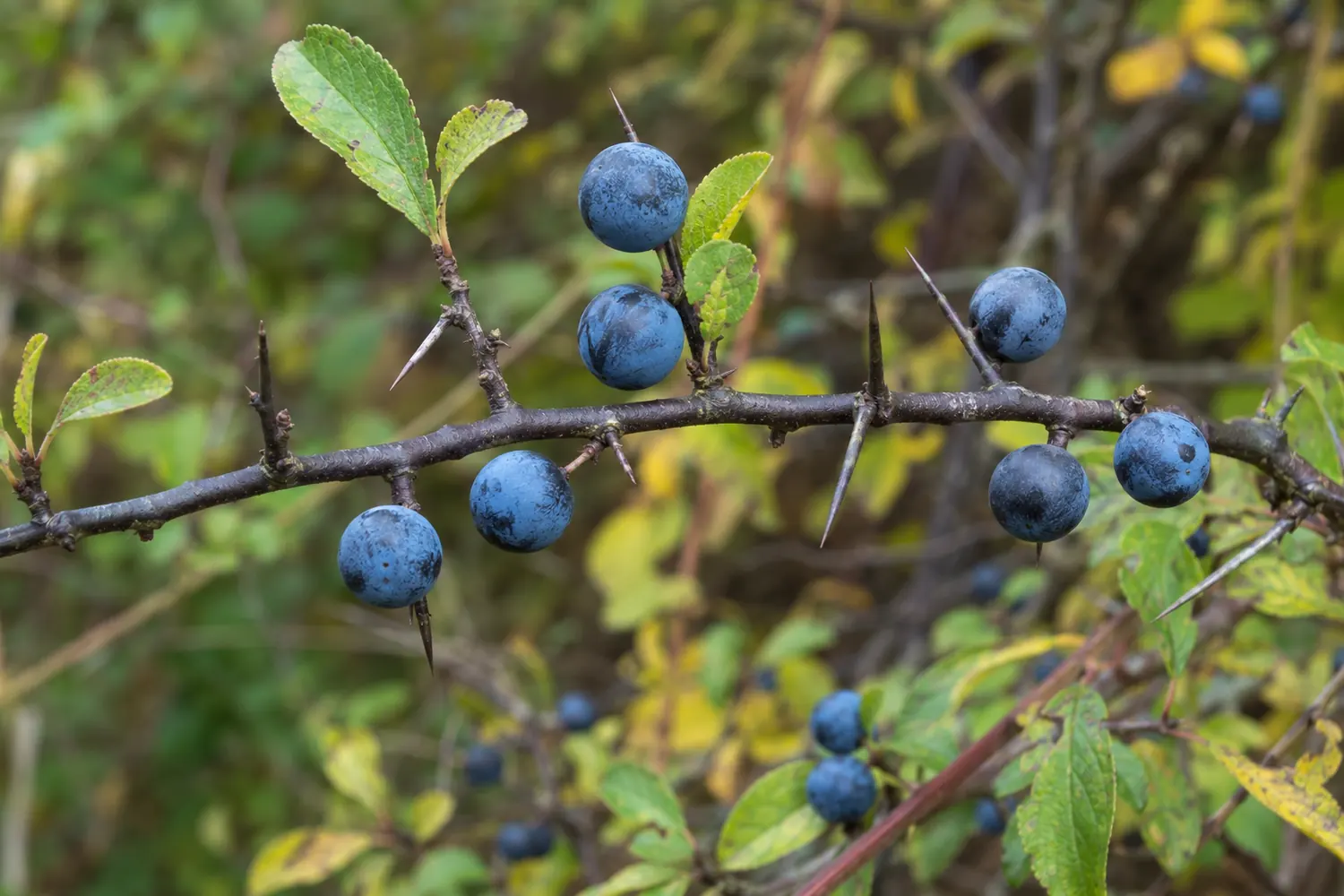 October – November
Sloes
Prunus spinosa · Schwarzdorn
- Feature:
- small blue-black, tart fruits on a thorny shrub.
- Habitat:
- hedges, field & forest edges.
- Kitchen:
- mild only after frost – liqueur, jam.
Group 3 · Wild herb lore
Wild herbs – seasoning from forest & meadow
Gather herbs in the late morning, once the dew has dried. Reliable identification is decisive: read scent, leaf shape and flowering time together – and when in doubt, leave it standing.
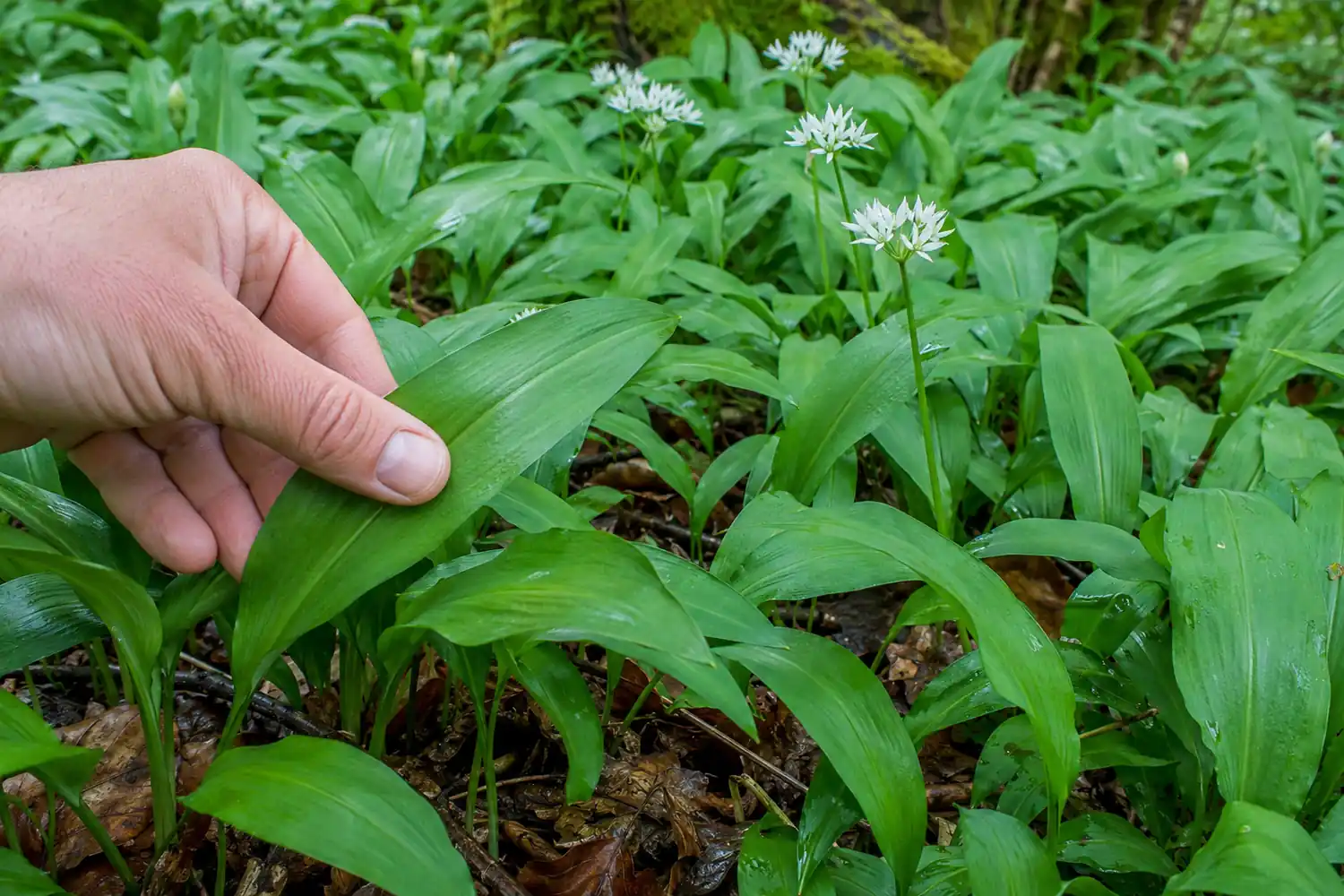 March – May
Bärlauch (wild garlic)
Allium ursinum
- Feature:
- intense garlic scent when rubbed – the most reliable identifier.
- Habitat:
- shady riparian forests, often in large carpets.
- ⚠ Look-alike:
- lily of the valley & autumn crocus (poisonous!) – scent test.
- Kitchen:
- pesto, spread, soup.
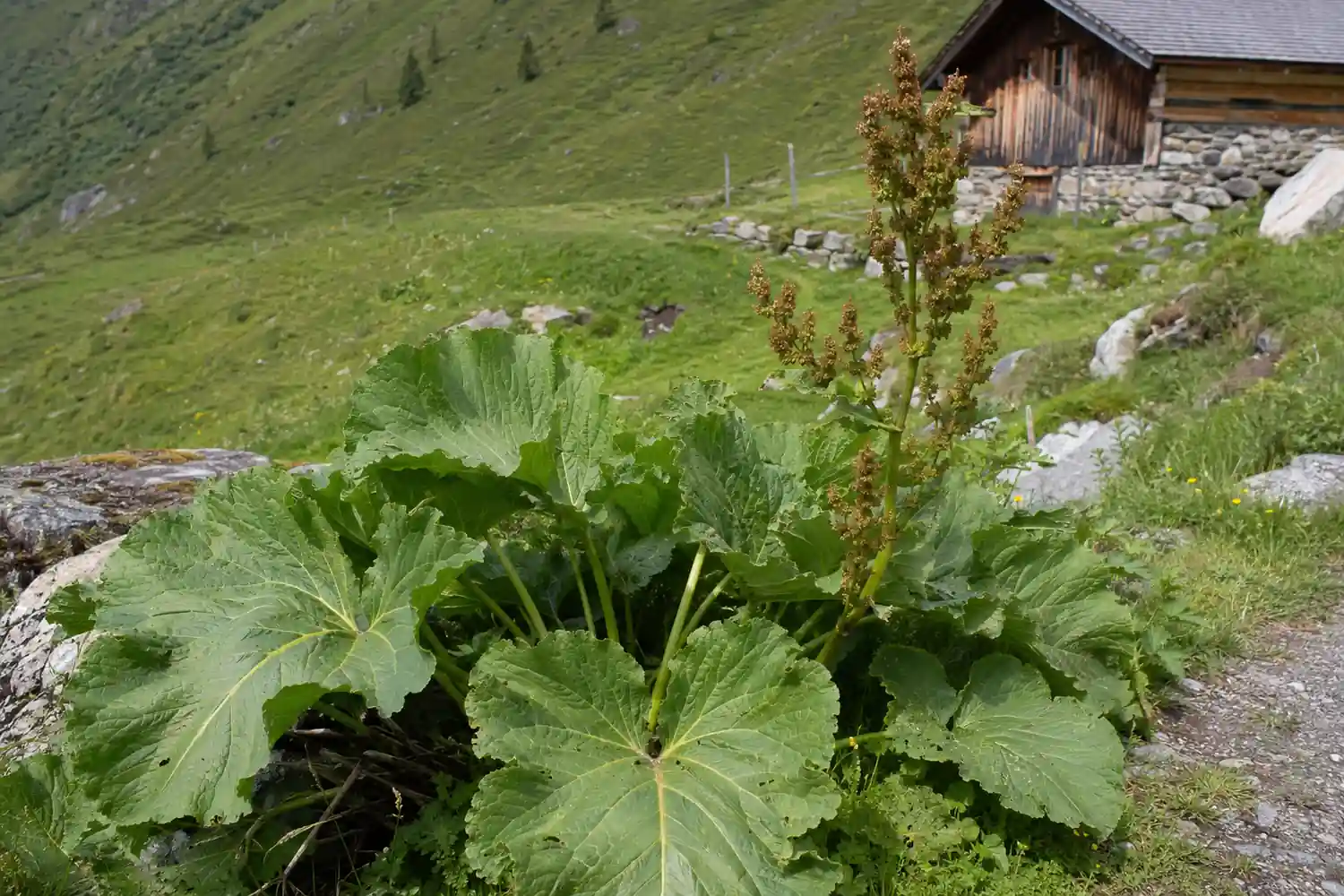 May – August
Alpine dock
Rumex alpinus
- Feature:
- large, broad leaves; pleasantly tart taste.
- Habitat:
- fertilised Alm soils, resting-area meadows (Lägerfluren), stream banks.
- Kitchen:
- Alpine dock soup, as a wild vegetable.
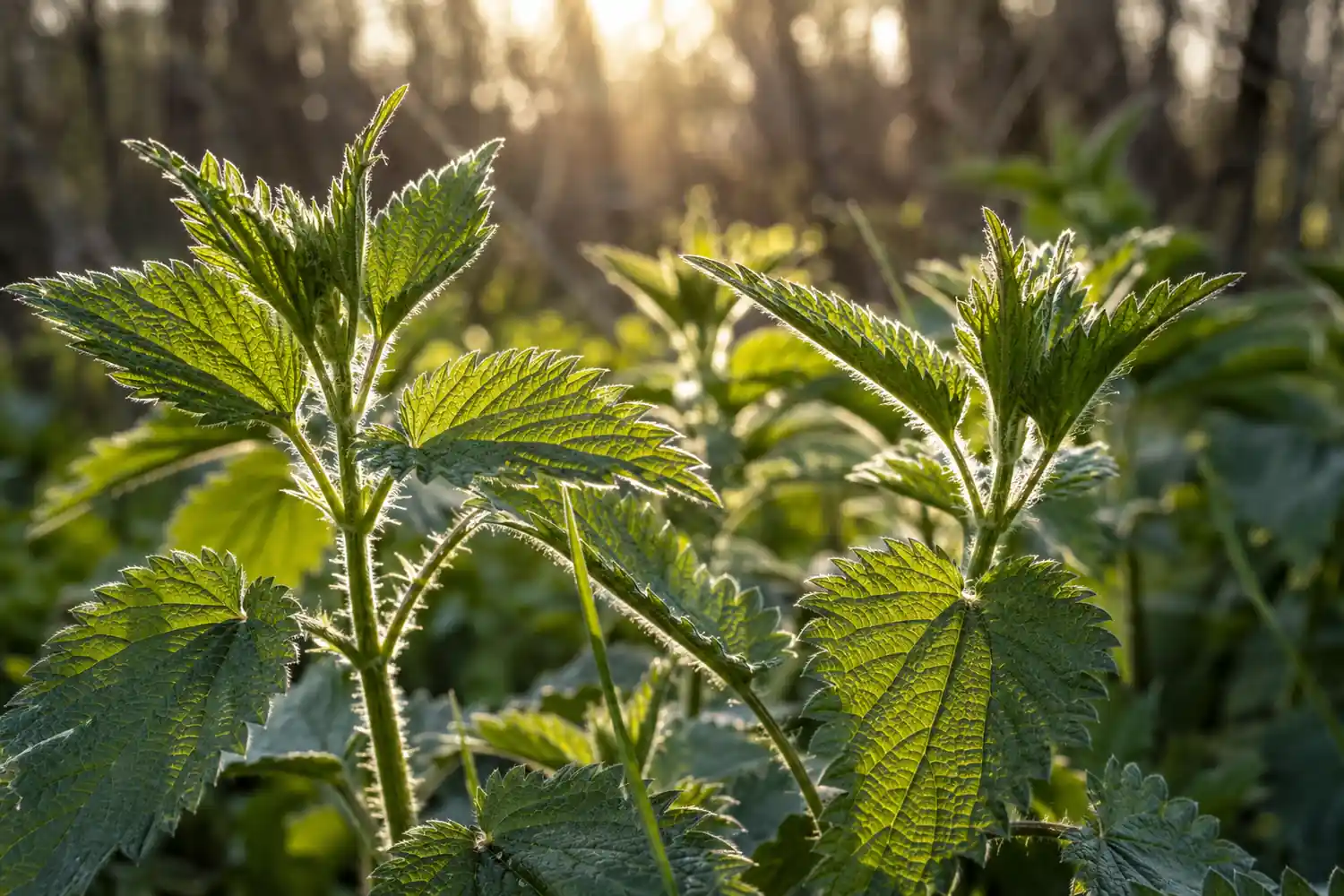 April – September
Stinging nettle
Urtica dioica
- Feature:
- stinging hairs, toothed opposite leaves.
- Habitat:
- nutrient-rich soils – almost everywhere.
- Kitchen:
- soup, spinach-style, tea; blanch briefly.
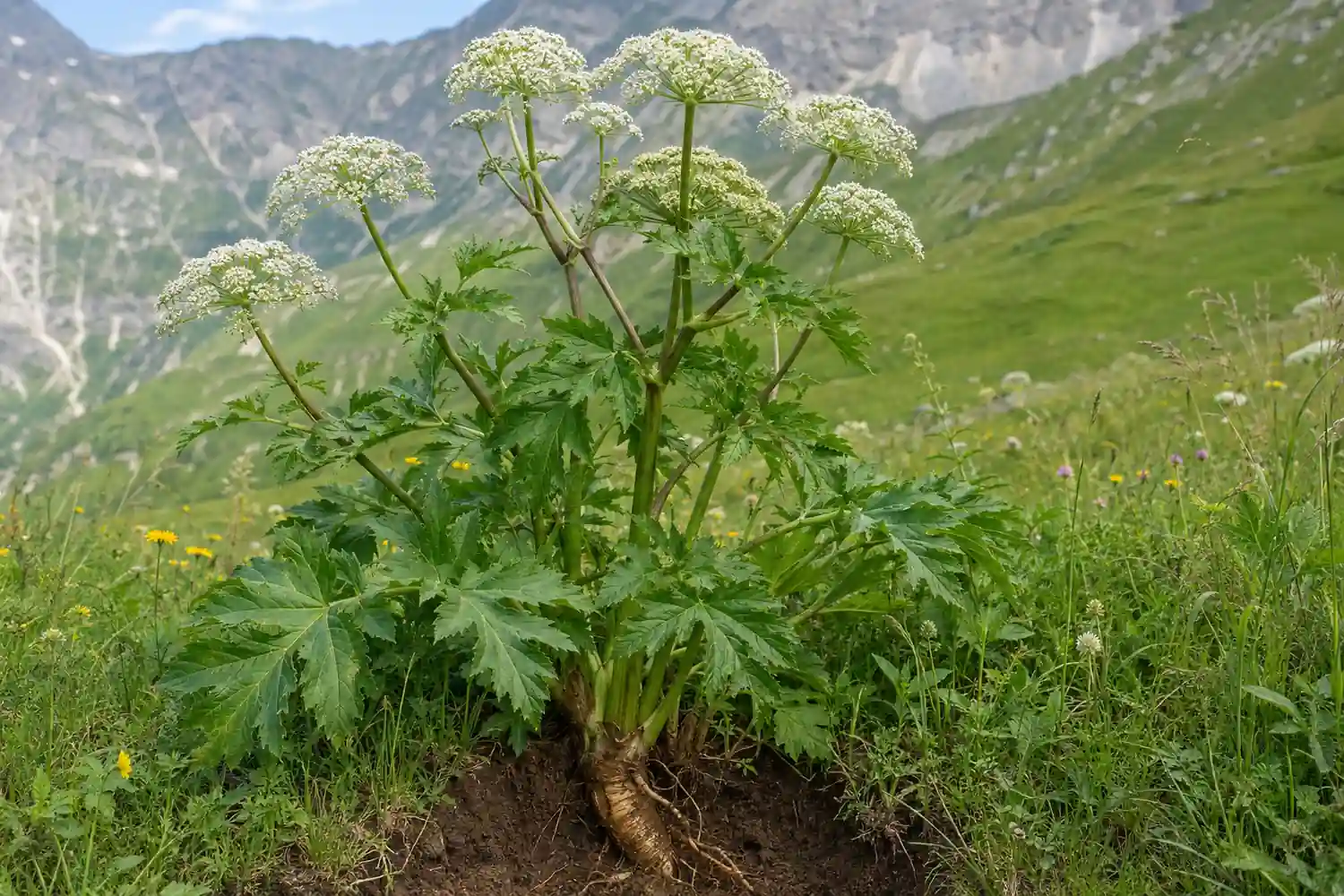 July – September
Masterwort
Peucedanum ostruthium
- Feature:
- umbellifer, aromatic-pungent root.
- Habitat:
- moist Alm meadows, tall herb communities.
- Kitchen:
- dried root as tea, spice or herbal schnapps.
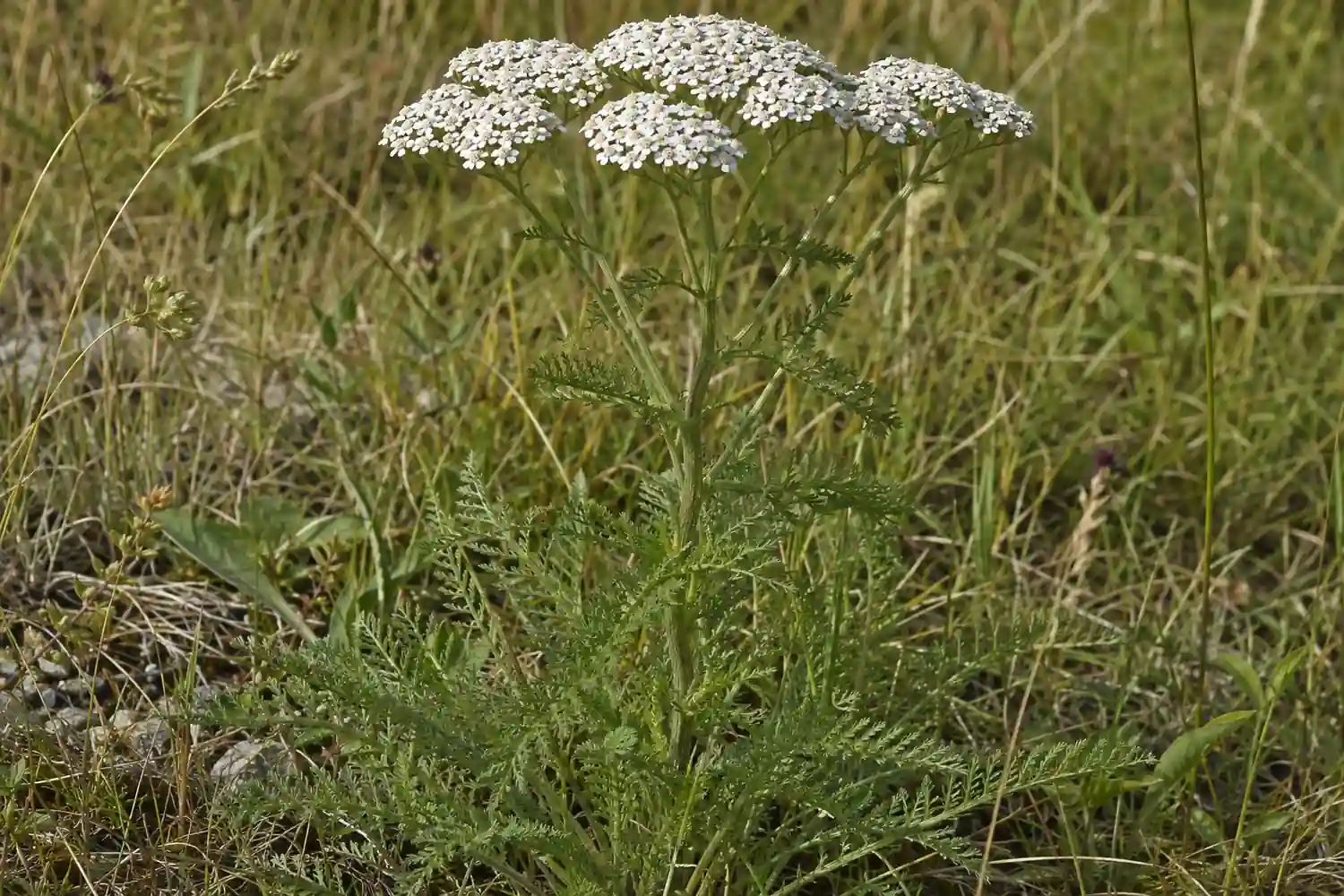 June – September
Yarrow
Achillea millefolium
- Feature:
- finely feathered leaves, white umbel flowers, spicy scent.
- Habitat:
- meadows, waysides, dry embankments.
- Kitchen:
- salads, herb butter, tea.
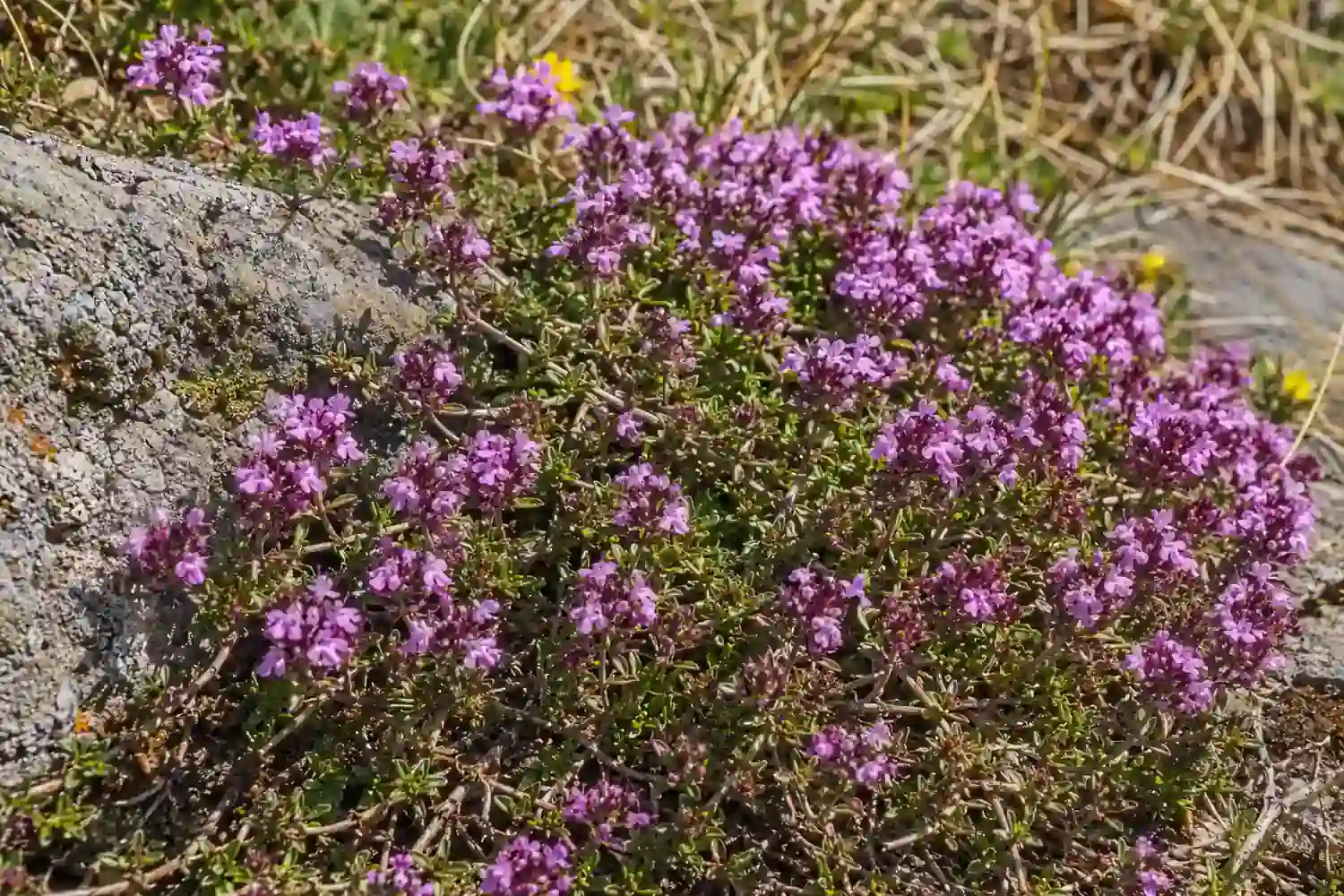 June – August
Wild thyme
Thymus · Wilder Thymian
- Feature:
- low-growing, small pink flowers, strong thyme-like scent.
- Habitat:
- dry, sunny slopes and nutrient-poor grassland.
- Kitchen:
- tea, for seasoning meat & vegetables.
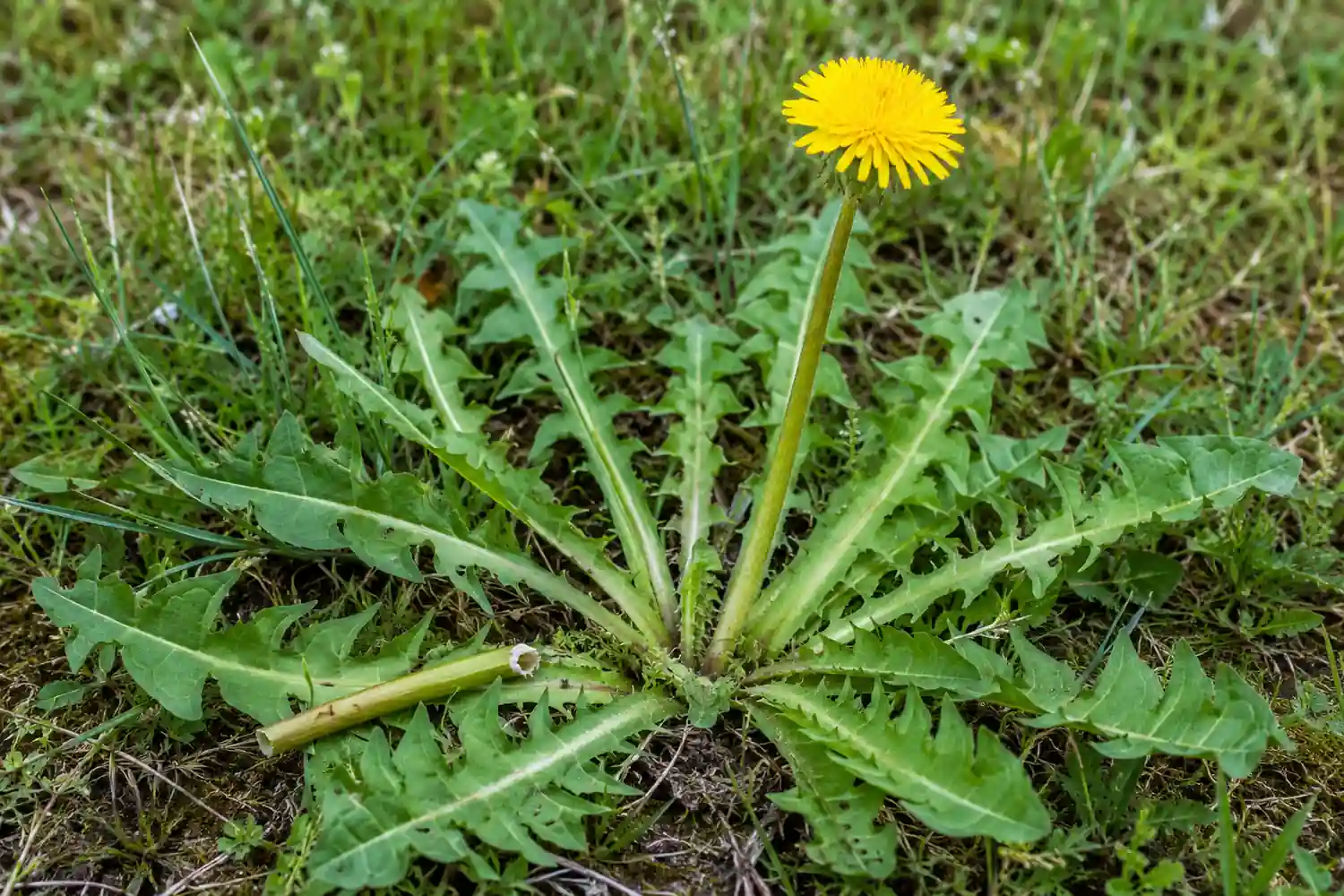 March – October
Dandelion
Taraxacum officinale
- Feature:
- jagged rosette leaves, hollow stem with milky sap, yellow flower.
- Habitat:
- meadows and waysides – practically everywhere.
- Kitchen:
- young leaves as salad, flowers for syrup.
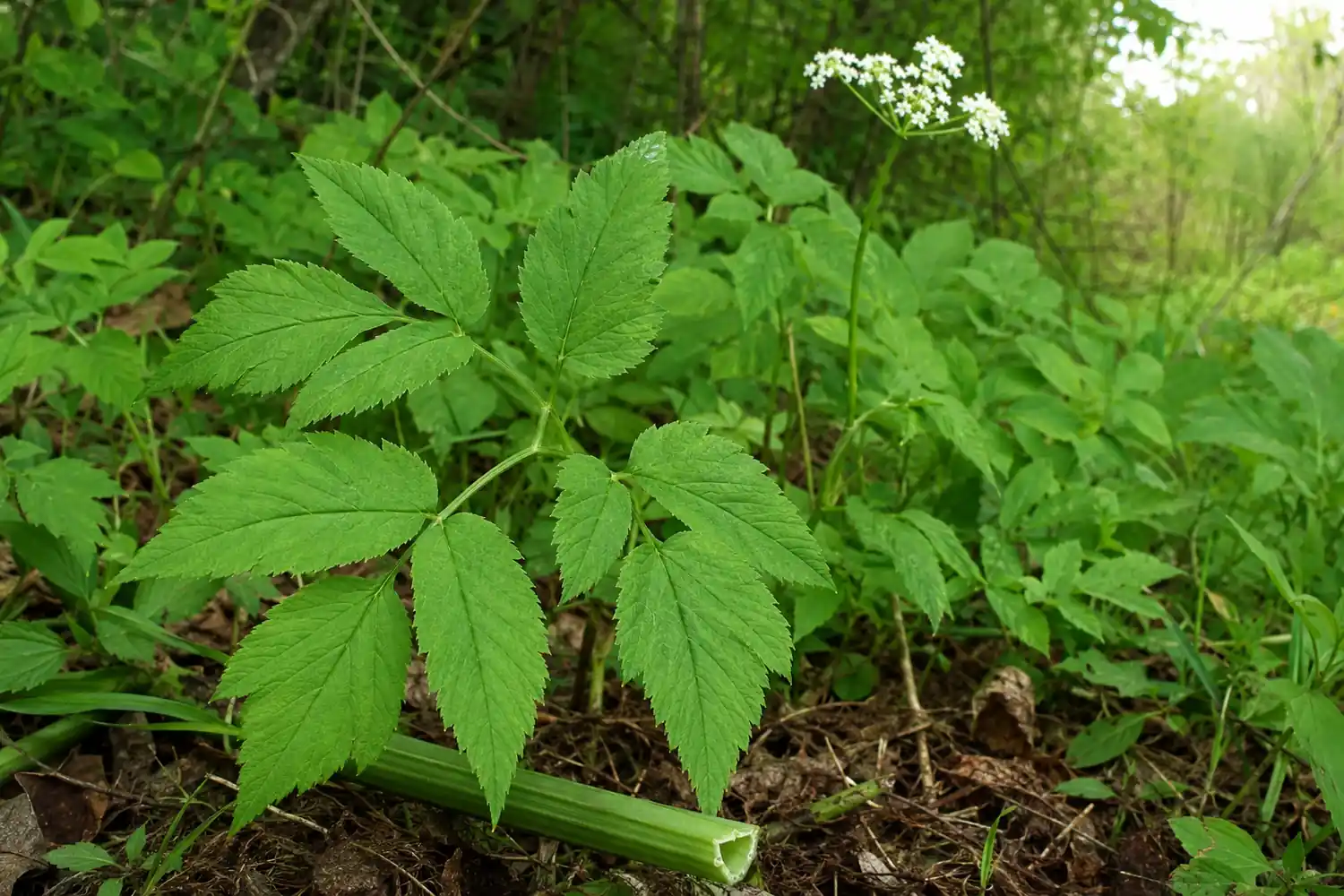 April – June
Ground elder
Aegopodium podagraria
- Feature:
- triangular stem, leaves „three by three", parsley-like scent.
- Habitat:
- shady, moist spots; widespread.
- ⚠ Look-alike:
- other umbellifers – check the triangular stem.
- Kitchen:
- like spinach or parsley.
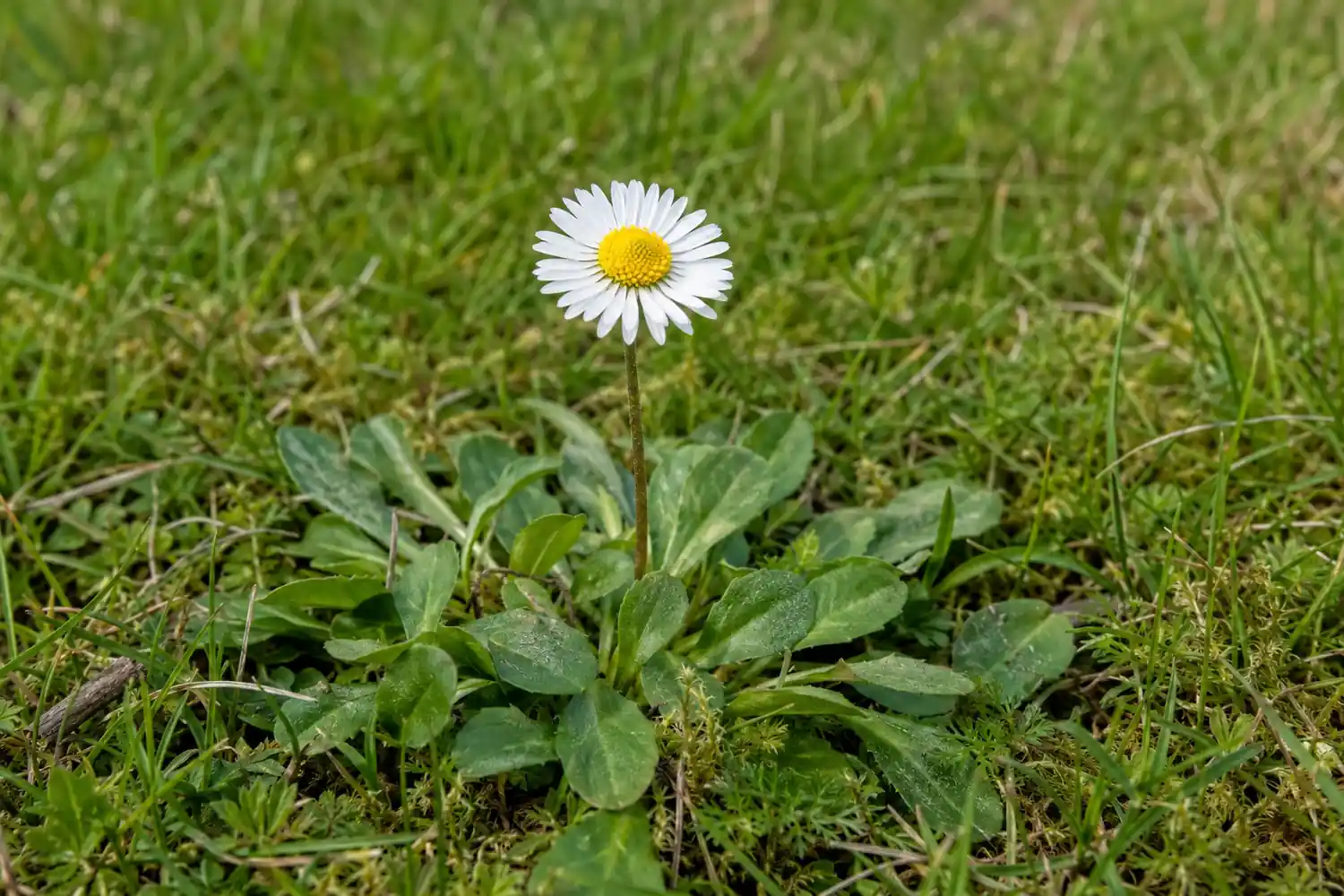 March – October
Daisy
Bellis perennis
- Feature:
- small white ray florets with a yellow centre, leaf rosette.
- Habitat:
- meadows and lawns.
- Kitchen:
- mild decoration for salads; buds like capers.
Find your hut by what matters to you
Choose what makes your holiday – and instantly see the matching huts.
More from our holiday know-how: The forest you gather in is almost always a managed forest – and what happens there over the year shows in the stand: Wood from our own forest.